Policy Brief: Jigawa School Self Graded Assessment

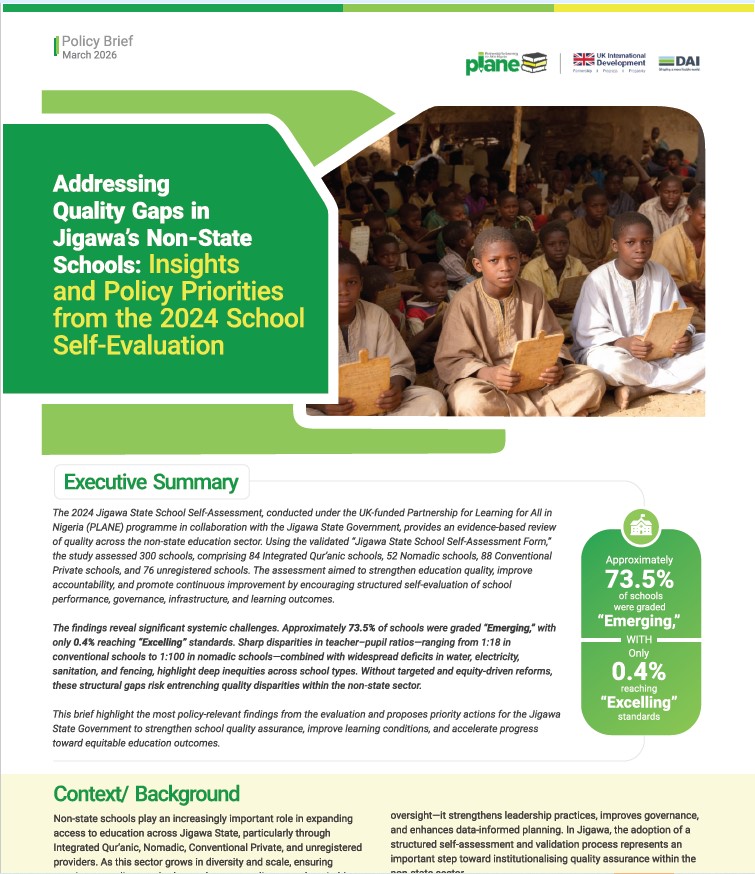
The 2024 Jigawa State School Self-Assessment, conducted under the UK-funded Partnership for Learning for All in Nigeria (PLANE) programme in collaboration with the Jigawa State Government, provides an evidence-based review of quality across the non-state education sector. Using the validated “Jigawa State School Self-Assessment Form,” the study assessed 300 schools, comprising 84 Integrated Qur’anic schools, 52 Nomadic schools, 88 Conventional Private schools, and 76 unregistered schools. The assessment aimed to strengthen education quality, improve accountability, and promote continuous improvement by encouraging structured self-evaluation of school performance, governance, infrastructure, and learning outcomes.

The findings reveal significant systemic challenges. Approximately 73.5% of schools were graded “Emerging,” with only 0.4% reaching “Excelling” standards. Sharp disparities in teacher–pupil ratios—ranging from 1:18 in conventional schools to 1:100 in nomadic schools—combined with widespread deficits in water, electricity, sanitation, and fencing, highlight deep inequities across school types. Without targeted and equity-driven reforms, these structural gaps risk entrenching quality disparities within the non-state sector.

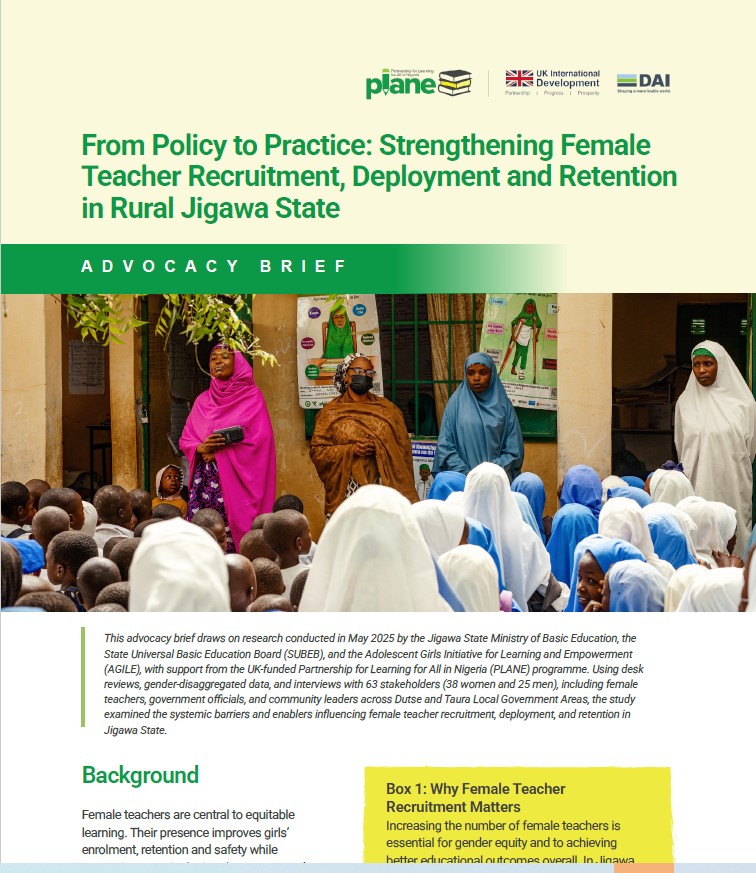
From Policy to Practice- Strengthening Female Teacher Recruitment, Deployment and Retention in Rural Jigawa State

Female teachers are central to equitable learning. Their presence improves girls’ enrolment, retention and safety while promoting more inclusive classrooms and improving overall education outcomes. Yet Jigawa State faces a serious shortage, and uneven distribution of female teachers. This is particularly relevant in rural areas. This limits girls’ access to quality education and compounds wider teacher workforce pressures.

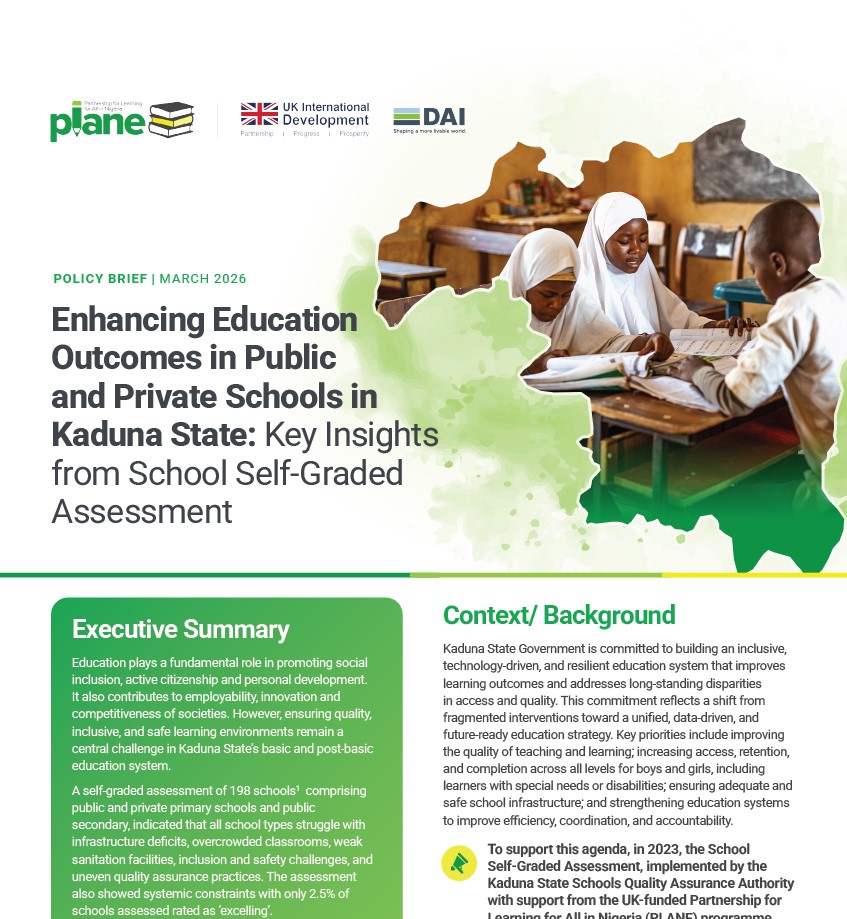
Enhancing Education Outcomes in Public and Private Schools in Kaduna State- Key Insights from School Self-Graded Assessment

Education plays a fundamental role in promoting social inclusion, active citizenship and personal development. It also contributes to employability, innovation and competitiveness of societies. However, ensuring quality, inclusive, and safe learning environments remain a central challenge in Kaduna State’s basic and post-basic education system.

A self-graded assessment of 198 schools¹, comprising public and private primary schools and public secondary, indicated that all school types struggle with infrastructure deficits, overcrowded classrooms, weak sanitation facilities, inclusion and safety challenges, and uneven quality assurance practices. The assessment also showed systemic constraints with only 2.5% of schools assessed rated as ‘excelling’.

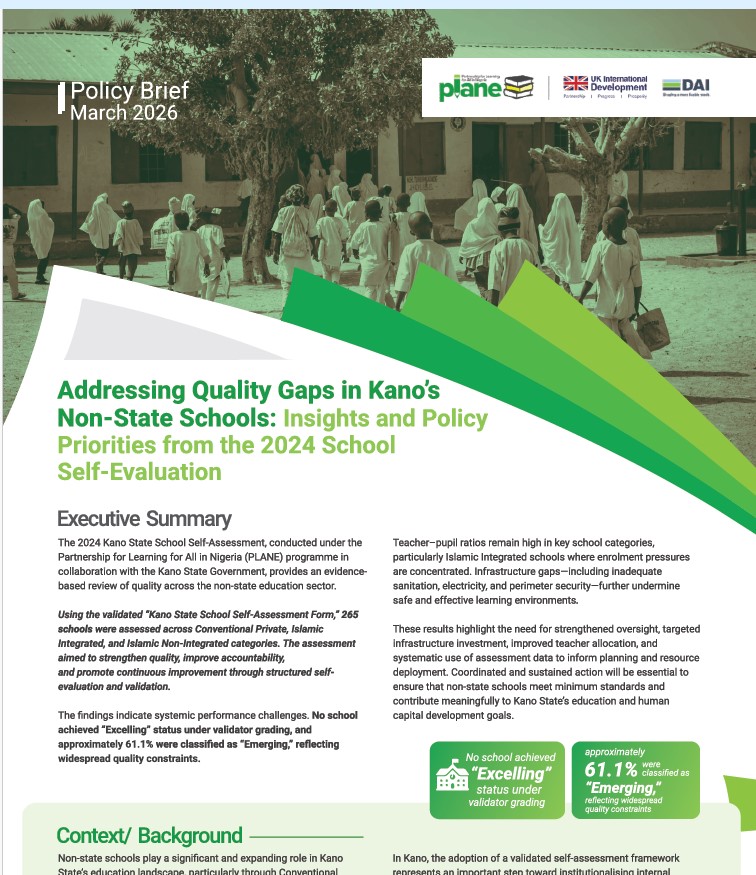
Addressing Quality Gaps in Kano State

The 2024 Kano State School Self-Assessment, conducted under the Partnership for Learning for All in Nigeria (PLANE) programme in collaboration with the Kano State Government, provides an evidence-based review of quality across the non-state education sector.

Using the validated “Kano State School Self-Assessment Form,” 265 schools were assessed across Conventional Private, Islamic Integrated, and Islamic Non-Integrated categories. The assessment aimed to strengthen quality, improve accountability, and promote continuous improvement through structured self-evaluation and validation.

The findings indicate systemic performance challenges. No school achieved “Excelling” status under validator grading, and approximately 61.1% were classified as “Emerging,” reflecting widespread quality constraints.

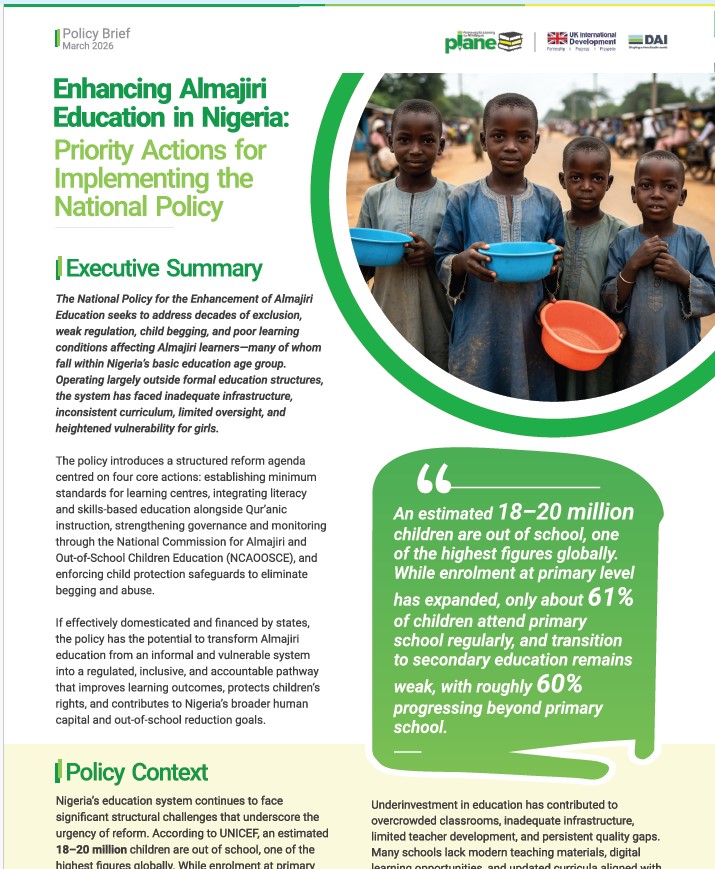
Policy Brief: National Policy For the Enactment of Almajiri Education in Nigeria.

The National Policy for the Enhancement of Almajiri Education seeks to address decades of exclusion, weak regulation, child begging, and poor learning conditions affecting Almajiri learners—many of whom fall within Nigeria’s basic education age group. Operating largely outside formal education structures, the system has faced inadequate infrastructure, inconsistent curricula, limited oversight, and heightened vulnerability for girls.

The policy introduces a structured reform agenda centred on four core actions: establishing minimum standards for learning centres, integrating literacy and skills-based education alongside Qur’anic instruction, strengthening governance and monitoring through the National Commission for Almajiri and Out-of-School Children Education (NCAOOSCE), and enforcing child protection safeguards to eliminate begging and abuse.

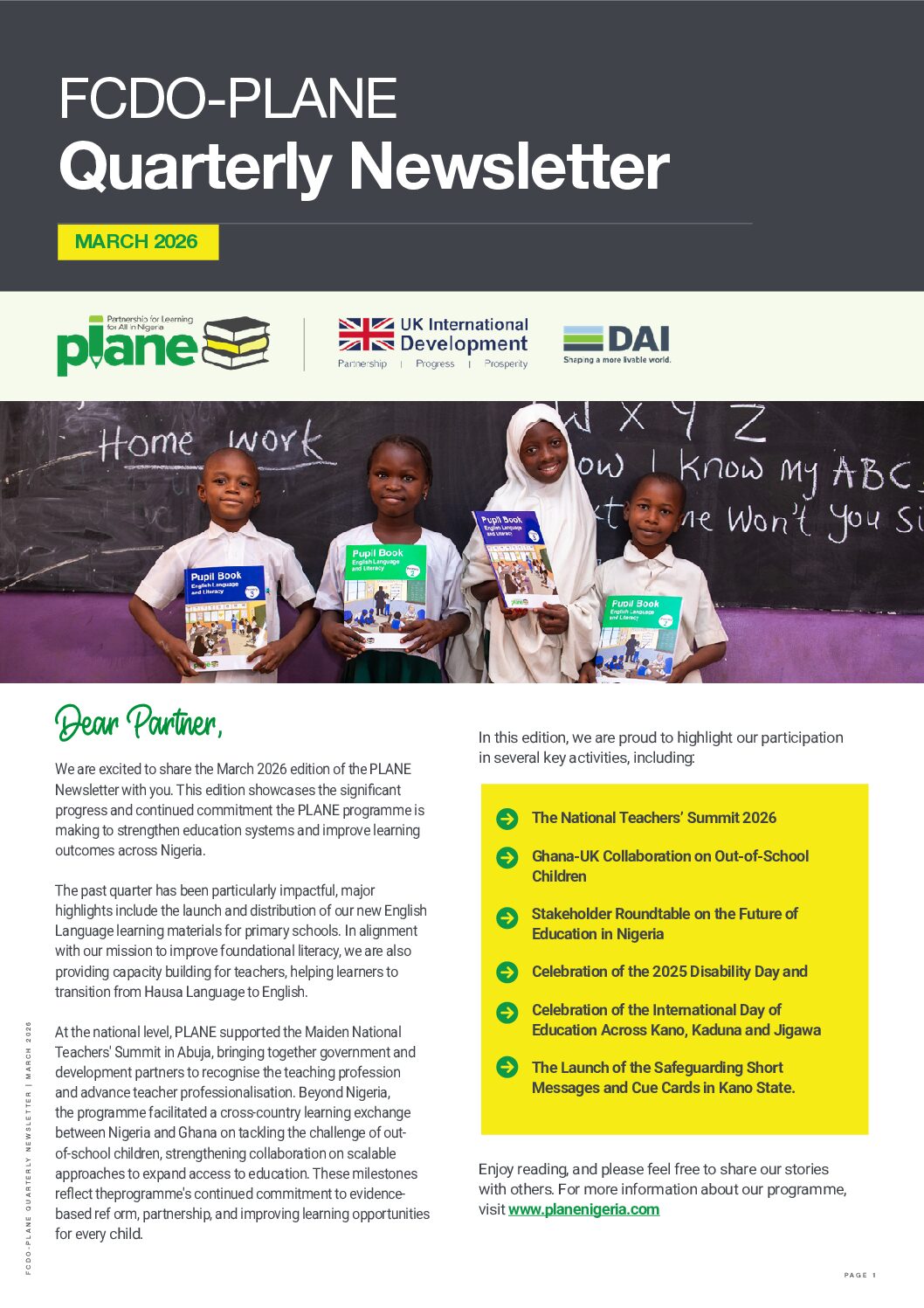
Plane March 2026 Newsletter 4.0

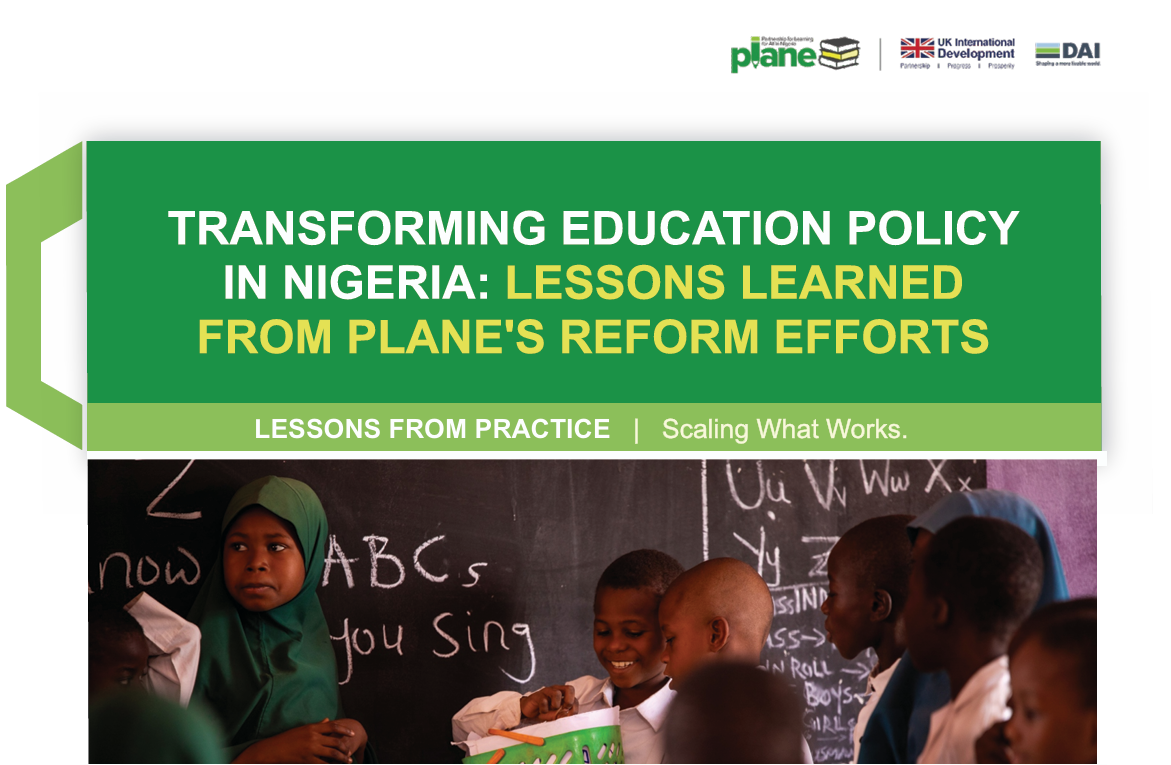
We are excited to share the March 2026 edition of the PLANE Newsletter with you. This edition showcases the significant progress and continued commitment the PLANE programme is making to strengthen education systems and improve learning outcomes across Nigeria.

The past quarter has been particularly impactful, major highlights include the launch and distribution of our new English Language learning materials for primary schools. In alignment with our mission to improve foundational literacy, we are also providing capacity building for teachers, helping learners to transition from Hausa Language to English.