Policy Brief: Jigawa School Self Graded Assessment

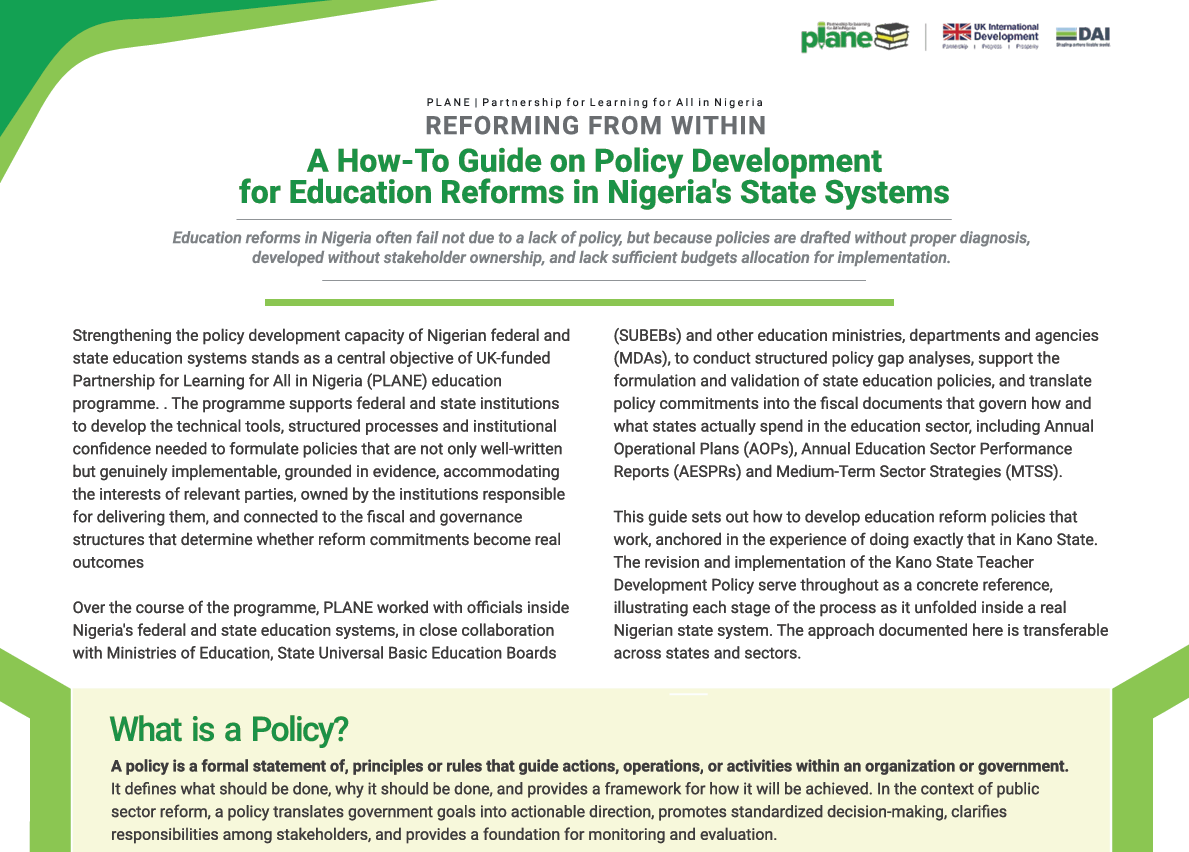
The 2024 Jigawa State School Self-Assessment, conducted under the UK-funded Partnership for Learning for All in Nigeria (PLANE) programme in collaboration with the Jigawa State Government, provides an evidence-based review of quality across the non-state education sector. Using the validated “Jigawa State School Self-Assessment Form,” the study assessed 300 schools, comprising 84 Integrated Qur’anic schools, 52 Nomadic schools, 88 Conventional Private schools, and 76 unregistered schools. The assessment aimed to strengthen education quality, improve accountability, and promote continuous improvement by encouraging structured self-evaluation of school performance, governance, infrastructure, and learning outcomes.

The findings reveal significant systemic challenges. Approximately 73.5% of schools were graded “Emerging,” with only 0.4% reaching “Excelling” standards. Sharp disparities in teacher–pupil ratios—ranging from 1:18 in conventional schools to 1:100 in nomadic schools—combined with widespread deficits in water, electricity, sanitation, and fencing, highlight deep inequities across school types. Without targeted and equity-driven reforms, these structural gaps risk entrenching quality disparities within the non-state sector.

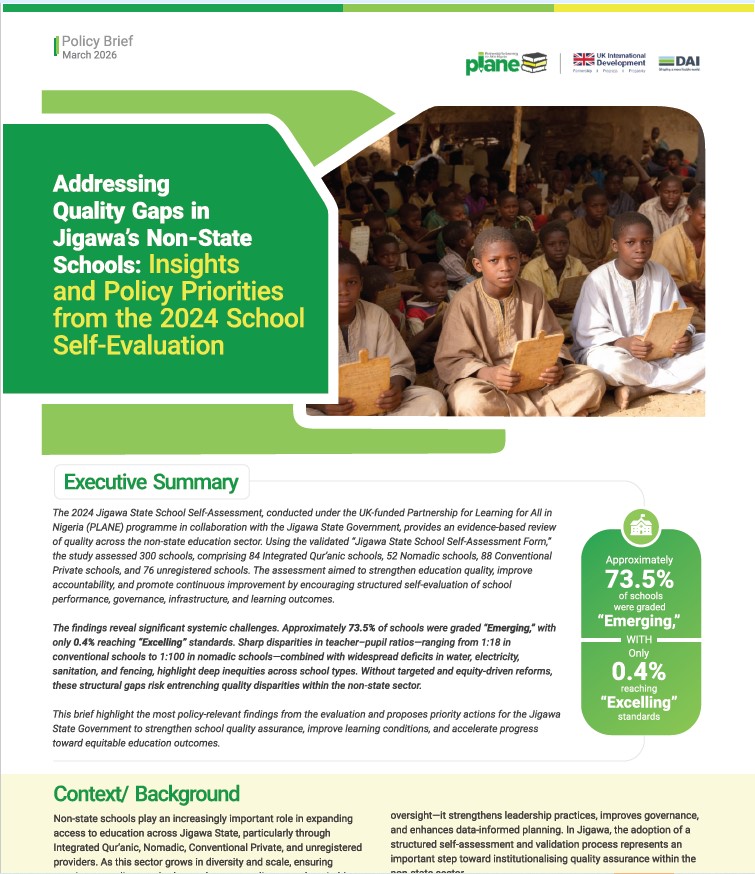
From Policy to Practice- Strengthening Female Teacher Recruitment, Deployment and Retention in Rural Jigawa State

Female teachers are central to equitable learning. Their presence improves girls’ enrolment, retention and safety while promoting more inclusive classrooms and improving overall education outcomes. Yet Jigawa State faces a serious shortage, and uneven distribution of female teachers. This is particularly relevant in rural areas. This limits girls’ access to quality education and compounds wider teacher workforce pressures.

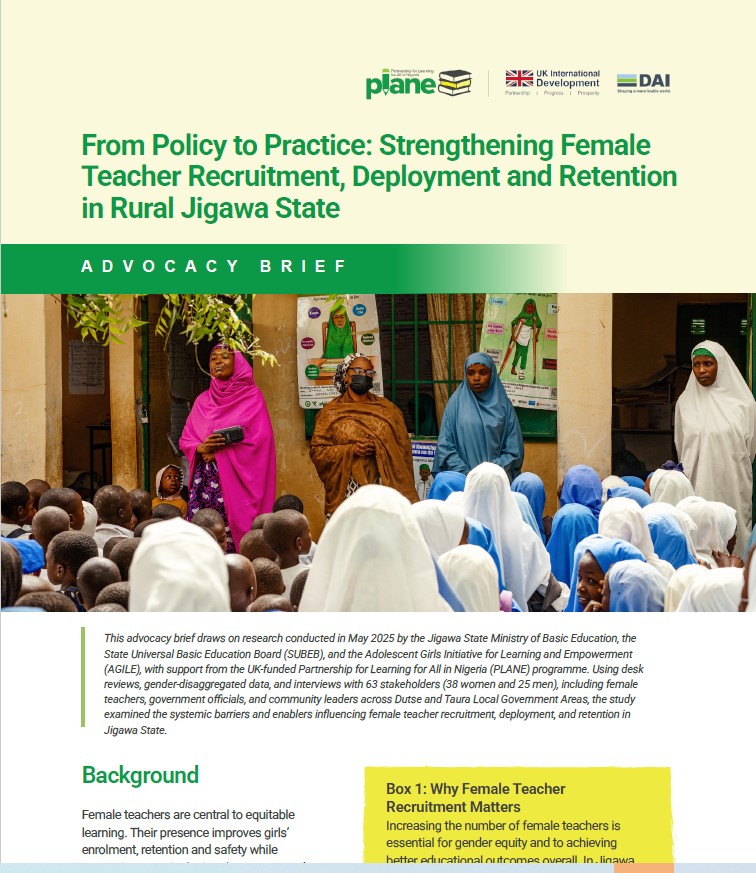
Enhancing Education Outcomes in Public and Private Schools in Kaduna State- Key Insights from School Self-Graded Assessment

Education plays a fundamental role in promoting social inclusion, active citizenship and personal development. It also contributes to employability, innovation and competitiveness of societies. However, ensuring quality, inclusive, and safe learning environments remain a central challenge in Kaduna State’s basic and post-basic education system.

A self-graded assessment of 198 schools¹, comprising public and private primary schools and public secondary, indicated that all school types struggle with infrastructure deficits, overcrowded classrooms, weak sanitation facilities, inclusion and safety challenges, and uneven quality assurance practices. The assessment also showed systemic constraints with only 2.5% of schools assessed rated as ‘excelling’.

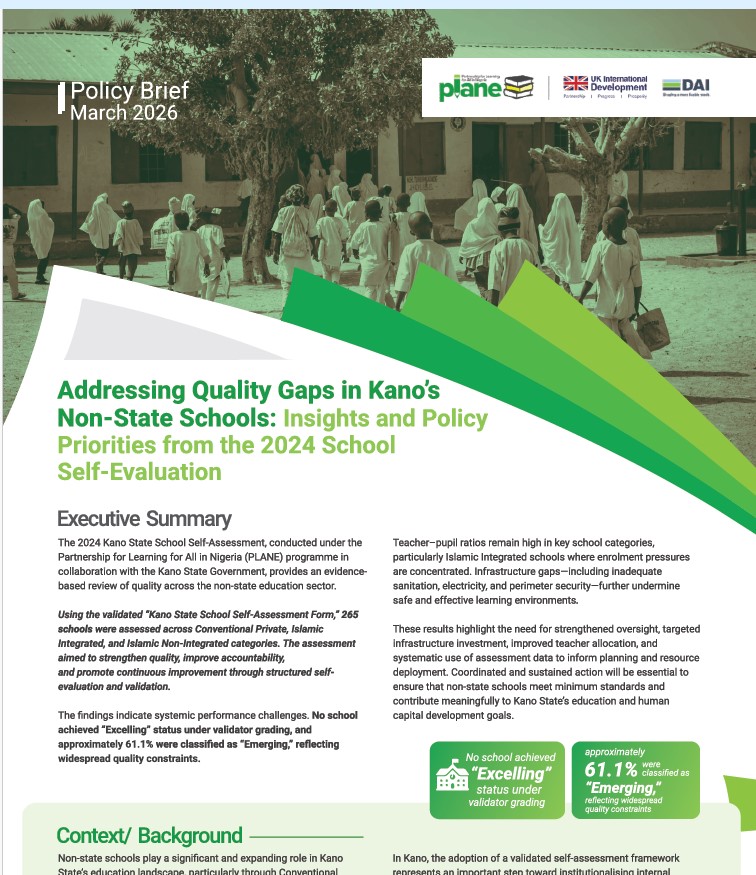
Addressing Quality Gaps in Kano State

The 2024 Kano State School Self-Assessment, conducted under the Partnership for Learning for All in Nigeria (PLANE) programme in collaboration with the Kano State Government, provides an evidence-based review of quality across the non-state education sector.

Using the validated “Kano State School Self-Assessment Form,” 265 schools were assessed across Conventional Private, Islamic Integrated, and Islamic Non-Integrated categories. The assessment aimed to strengthen quality, improve accountability, and promote continuous improvement through structured self-evaluation and validation.

The findings indicate systemic performance challenges. No school achieved “Excelling” status under validator grading, and approximately 61.1% were classified as “Emerging,” reflecting widespread quality constraints.

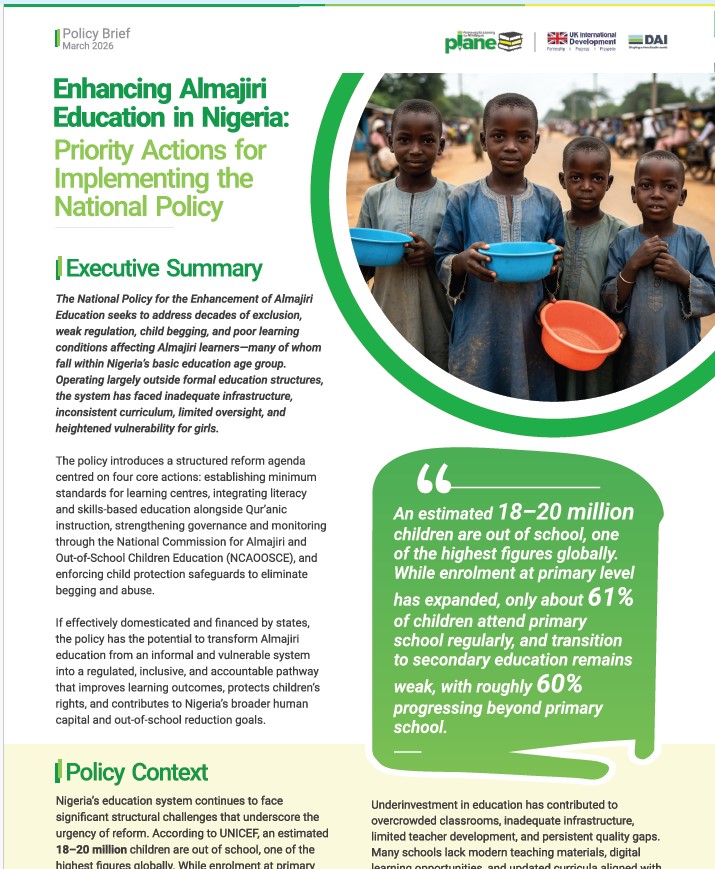
Policy Brief: National Policy For the Enactment of Almajiri Education in Nigeria.

The National Policy for the Enhancement of Almajiri Education seeks to address decades of exclusion, weak regulation, child begging, and poor learning conditions affecting Almajiri learners—many of whom fall within Nigeria’s basic education age group. Operating largely outside formal education structures, the system has faced inadequate infrastructure, inconsistent curricula, limited oversight, and heightened vulnerability for girls.

The policy introduces a structured reform agenda centred on four core actions: establishing minimum standards for learning centres, integrating literacy and skills-based education alongside Qur’anic instruction, strengthening governance and monitoring through the National Commission for Almajiri and Out-of-School Children Education (NCAOOSCE), and enforcing child protection safeguards to eliminate begging and abuse.

PLANE Midline Evaluation Report

The Midline Evaluation of PLANE was delivered by a consortium led by Ecorys UK through the Human Development Evaluation Learning and Verification Service (DELVe). The purpose of the Midline was to describe and critically assess progress, outputs and outcomes along the change pathways described in the PLANE portfolio Theory of Change. The evaluation covered the full implementation of the programme from January 2023 to August 2025 across all PLANE interventions in Kano, Kaduna and Jigawa states in North West Nigeria and in Borno and Yobe states in the North East, and at federal level. The evaluation was completed and approved in March 2026.

The full report is available below.

PLANE-Supported Policy Influencing for Systemic Education Reforms: Final Report DELVe Technical Assistance and Research Workstream.

Ecorys UK Limited (Ecorys), in consortium with Itad Limited (Itad) and Preston Associates for International Development (Preston Associates), have been contracted by the Foreign Commonwealth and Development Office Nigeria (FCDO-N) to provide evaluation, learning and verification services through Human Development Evaluation Learning and Verification Service (DELVe) for FCDO-N’s flagship education programme in Nigeria, Partnership for Learning for All in Nigeria (PLANE). PLANE is an FCDO Nigeria programme with total investment of up to £170 million from 2019 to 2028 aimed at supporting the Government of Nigeria (GoN) at the federal level, and with selected states and non-state partners, to improve teaching, school quality, education management and efficient delivery of education, benefitting up to 2 million children.

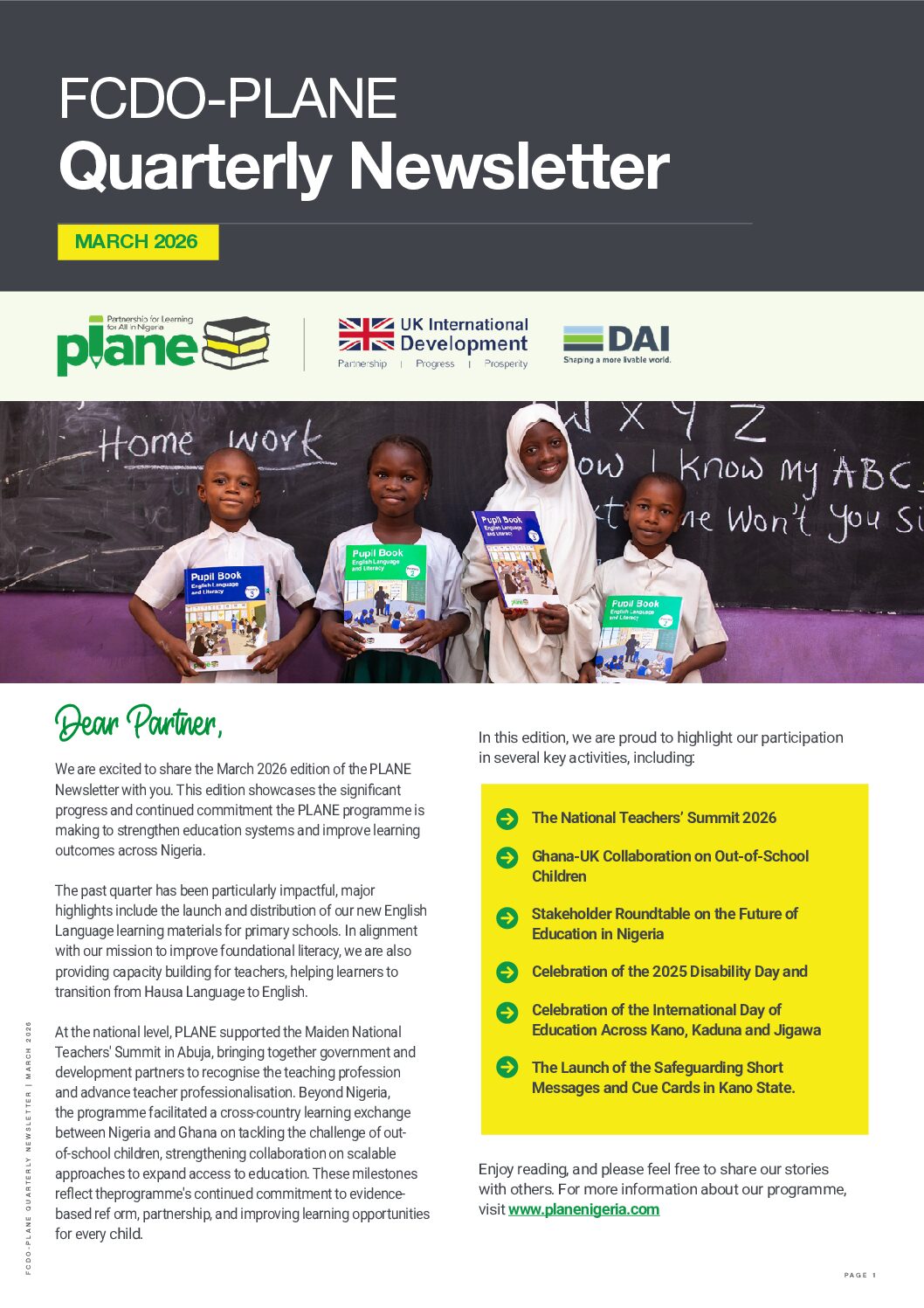
Plane March 2026 Newsletter 4.0

We are excited to share the March 2026 edition of the PLANE Newsletter with you. This edition showcases the significant progress and continued commitment the PLANE programme is making to strengthen education systems and improve learning outcomes across Nigeria.

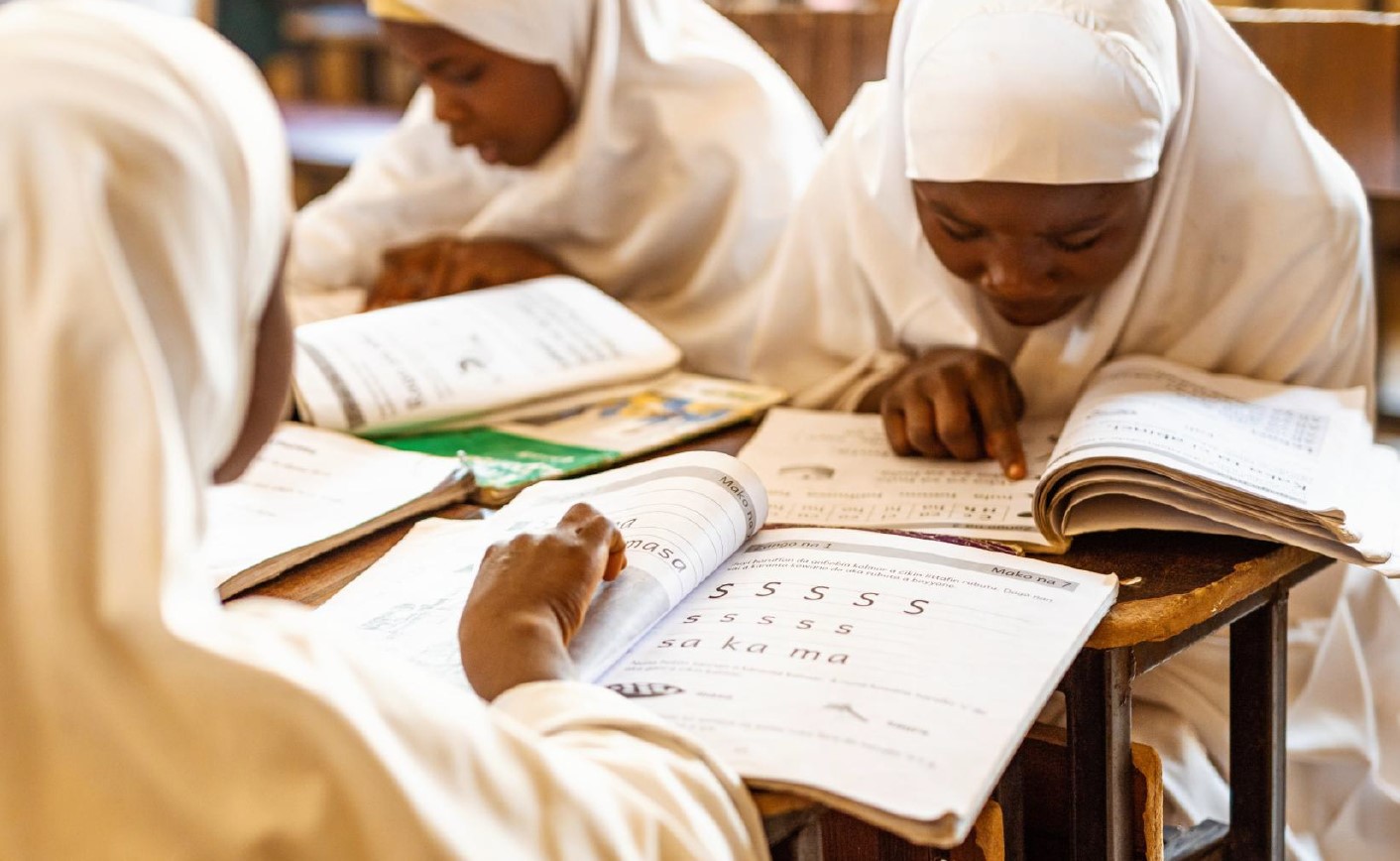
The past quarter has been particularly impactful, major highlights include the launch and distribution of our new English Language learning materials for primary schools. In alignment with our mission to improve foundational literacy, we are also providing capacity building for teachers, helping learners to transition from Hausa Language to English.

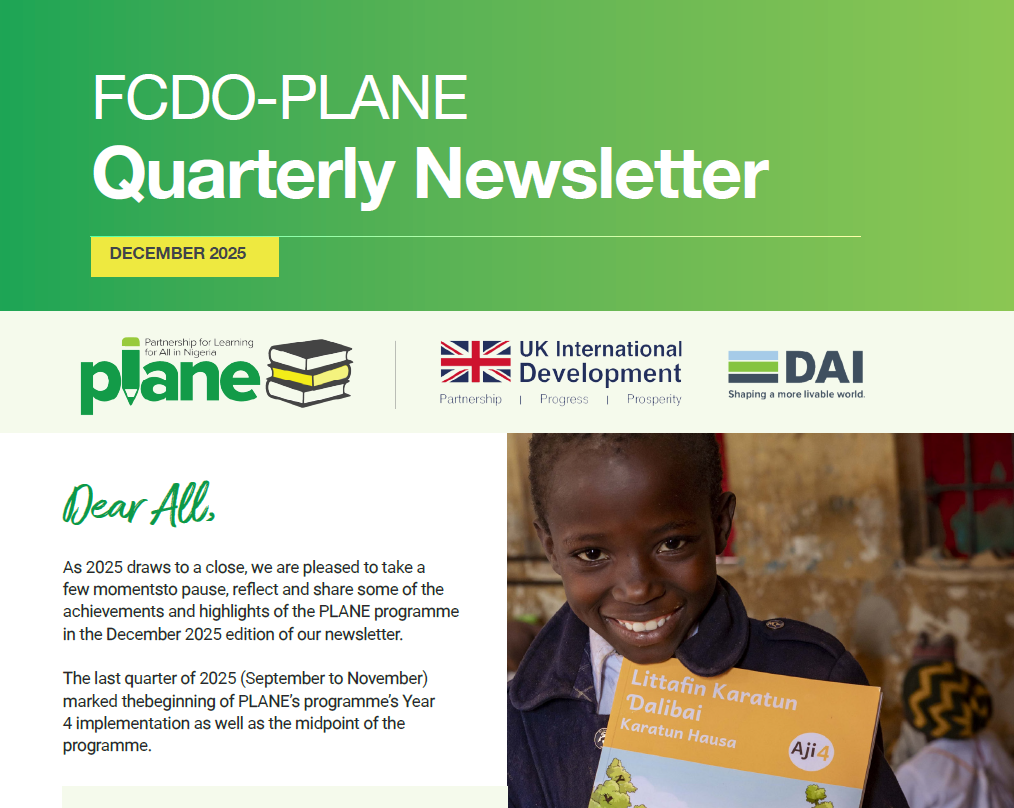
FCDO-PLANE Quarterly Newsletter (December 2025)

As 2025 draws to a close, we are pleased to take a few moments to pause, reflect and share some of the achievements and highlights of the PLANE programme in the December 2025 edition of our newsletter.

The last quarter of 2025 (September to November) marked the beginning of PLANE’s programme’s Year 4 implementation as well as the midpoint of the programme. In this edition, we are proud to highlight several key achievements, including PLANE’s progress to date and results from our Year 3 learning assessment outcomes.

Breaking Religious Barriers: Once Opposed to Western Education, Islamiya Devotees Embrace Kachako Community Learning Hub.

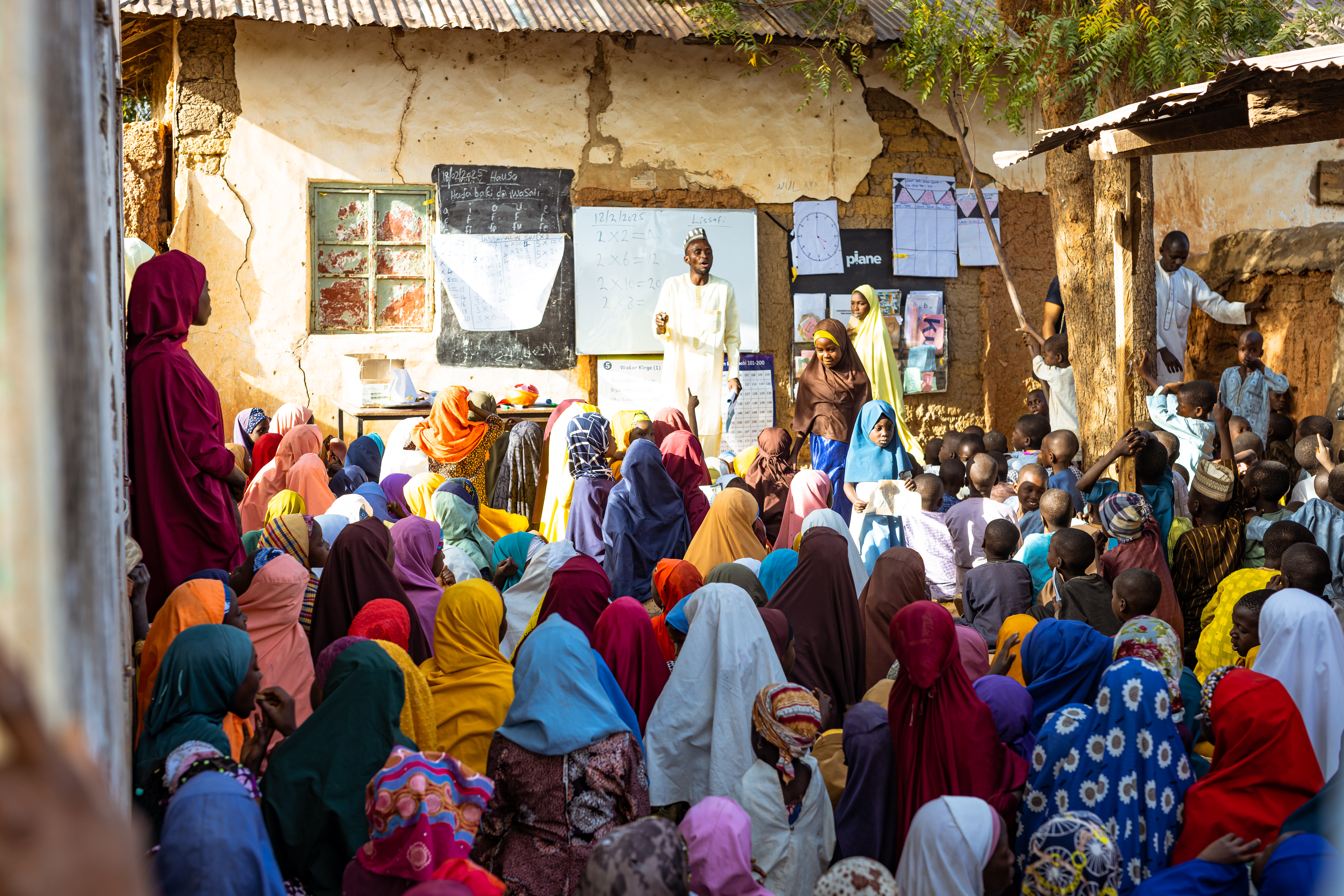
Deep-rooted cultural and religious norms in some communities can unintentionally limit children’s access to formal education. In Kachako, Kano State, the UK-funded Partnership for Learning for All in Nigeria (PLANE) programme is helping to change this through focused community advocacy and sensitisation. By establishing over 200 safe, community-based learning hubs, PLANE has created opportunities for both in-school and out-of-school children to learn. These hubs have sparked interest among children who were previously disengaged from education, including those from backgrounds resistant to Western-style schooling. Many are now beginning to embrace formal learning, marking a promising shift in attitudes and access.

Jigawa State 2025 Learning Assessment Outcomes.

To assess learners’ performance and measure
improvements over the course of three years of
implementation, PLANE, in collaboration with the
Jigawa State Government, conducted a midline
assessment during the 2024/2025 school year.
It focused on the literacy and numeracy skills of
Primary 2 and 4 learners in 34 sampled schools
across the seven intervention LGAs, using the Early
Grade Reading and Mathematics Assessment
(EGRA and EGMA) tools.

Kaduna State 2025 Learning Assessment Outcomes.

To assess learners’ performance and measure improvements over the course of three years of implementation, PLANE, in collaboration with the Kaduna State Government, conducted a midline assessment during the 2024/2025 school year.
It focused on the literacy and numeracy skills of Primary 2 and 4 learners in 43 sampled schools across 6 intervention LGAs, using the Early Grade Reading and Mathematics Assessment (EGRA and EGMA) tools.